
SMEs With 30% Disabled Workers, Gender Parity Achieve Zero Turnover
Small and medium-sized enterprises are under existential threat as high exchange rates, elevated costs become entrenched and economic recession continues. Adding to their woes, companies face the double burden of survival and employment due to a structural mismatch between young people's prolonged job-seeking gaps and companies struggling to secure needed talent.
The youth employment crisis and hiring difficulties at mid-sized and small companies have reached serious levels. According to a recent survey by the Korea Economic Association of 1,020 young people and 215 mid-sized and small companies, seven out of ten young people (66.7%) said they had experienced employment gaps. Additionally, 39% reported gaps lasting more than six months. Meanwhile, 58% of companies responded that "hiring talent is not easy" when asked about their perceived level of difficulty in recruiting young workers.
When asked about the biggest challenges in hiring young workers, 25% (multiple responses allowed) cited that "many employees quit shortly after joining, making it difficult to secure stable manpower." Insufficient financial capacity to meet the wage levels young people want (17%) followed. For the most needed government or local government support measures, 24% selected support for improving working conditions for young employees, such as shuttle buses, dormitories, housing subsidies and company cafeterias. This indicates a significant gap between the wages and benefits young people want and the reality companies face.
Despite these difficult circumstances, SMEs that are creating a virtuous cycle of corporate competitiveness and youth employment through job quality improvement are driving new winds of change across the market. These companies are leading efforts to create "SMEs where people want to work" by prioritizing employment of socially vulnerable groups including disabled persons and women, or by introducing flexible work systems on par with large corporations, along with organizational culture improvements and expanded benefits.
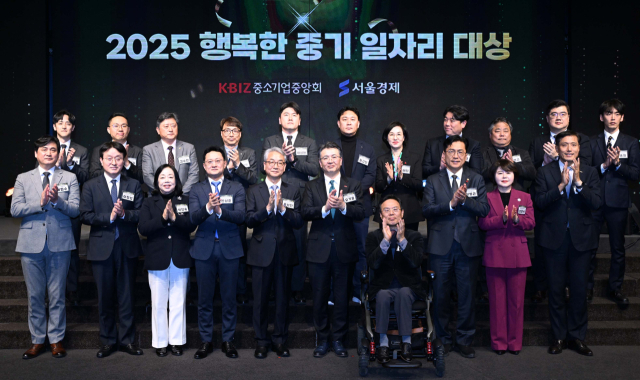
The companies and business leaders who won awards at the "2025 Happy SME Job Awards," co-hosted by Seoul Economic Daily and the Korea Federation of SMEs on January 9, are the protagonists leading this change. A total of 13 companies and business leaders received awards at this ceremony highlighting companies that have created sustainable job models.
This year, Webwatch and Asia BNC received Deputy Prime Minister and Minister of Economy and Finance commendations in the corporate and individual categories, respectively.
Webwatch, a web accessibility quality certification agency, is leading the realization of work-life balance based on employment stability. The company is particularly recognized in the industry as an exemplary creator of happy jobs through continuous expansion of employment for disabled persons and young people, and maintaining gender balance. In fact, disabled persons account for 30% of the company's 52 employees, with the male-female ratio at exactly half each. Excluding personnel whose short-term or intern contracts ended, the actual turnover rate over the past three years is 0%.
The company also operates various programs supporting employees' leisure and work-family balance, including "Family Love Day" where employees leave 30 minutes early on Fridays, flexible work arrangements, one month of vacation after five years of service, individual fitness allowances, and job-related education expense support.
Shin Sang-hoon, HR and General Affairs Team Leader at Asia BNC, a global distribution platform company, won the individual category award for his contributions to establishing company-wide welfare systems and improving working conditions. This year, he introduced a system allowing employees to use annual leave in one-hour increments to expand working hour flexibility, enabling employees to coordinate personal schedules. He also introduced a book purchase subsidy program, raised the support limit this year, and established a self-development-centered work culture through improvements to the education expense system.
Additionally, to support work-life balance, he expanded weekday flexible work arrangements and introduced the "Happy Monday" system with one hour of reduced work every Monday, and the "Family Day" system with two hours of early dismissal on the fourth Friday of each month. Through these welfare and work systems, Asia BNC is evaluated as a model company that has realized flexible work and family-friendly benefits at large corporation levels, transcending SME limitations. The company particularly pays incentives at 100-270% of base salary every January 10, fairly recognizing employees' efforts and achievements, completing a virtuous cycle structure that boosts work motivation and increases productivity.
Other award recipients recognized for creating stable jobs and spreading a positive image of SMEs include Ssangyong Stainless (Minister of Trade, Industry and Energy commendation), Speed Rack (Minister of Employment and Labor commendation), Squeeze Beats (Minister of SMEs and Startups commendation), iWay (Korea Technology Finance Corporation Chairman commendation), HKA (Korea SMEs and Startups Agency CEO commendation), Ion Police (Small Enterprise and Market Service CEO commendation), HSC (Korea Women Entrepreneurs Association President commendation), Nongkyung (Korea Venture Business Association President commendation), Santé Cosmetics (Korea Women Venture Association President commendation), Taejo Engineering (Seoul Economic Daily CEO commendation), and Jungseok Chemical (Korea Federation of SMEs Chairman commendation).