
BDC Success Hinges on Fund Managers' Expertise, Shinhan Executive Says
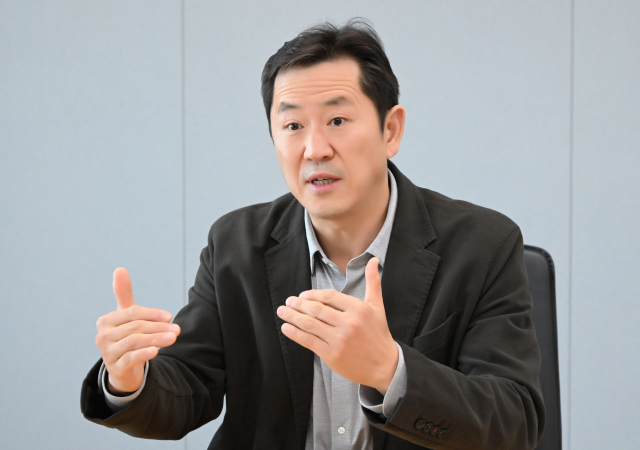
"Unlisted companies often have poor information accessibility and lack transparency. In such markets, investors inevitably have to rely on the capabilities of general partners," said Cho Sung-ho, head of alternative investments at Shinhan Asset Management.
In an interview with The Seoul Economic Daily on January 9, Cho emphasized that "what matters more than the system itself is ultimately the GP's capability and responsible investing." He noted that while Korea's Business Development Company (BDC) framework is meaningful in opening the venture capital market to retail investors, its actual effectiveness will vary significantly depending on fund managers' expertise.
The government announced draft revisions to the BDC enforcement decree on January 3, targeting implementation in March next year. The revisions establish the basic operational framework for BDCs, including allowing investment in secondary shares of venture partnerships, permitting concurrent lending, and setting parameters for listed company investments.
While the framework creates new pathways for individual investors to access unlisted companies, concerns have also been raised about the information asymmetry, valuation difficulties, and risks inherent to private markets. "In the early stages of this market, differences in GP capabilities will directly determine outcomes," Cho said.
Cho highlighted the decree's restriction on secondary investments in venture partnerships to those in their eighth or ninth year. Given that venture funds typically have long-term structures of eight to 10 years or more, the early stages of partnerships carry higher risks unsuitable for retail investors, he explained.
"Opening accessibility through a secondary approach aligns with the rationale of promoting exits and reinvestment," Cho said. "This is a reasonable measure reflecting the intent to ensure product stability."
Another notable change is that BDCs are designed to conduct lending alongside equity investments. "Startups and small and medium-sized enterprises often hesitate to accept investment even when they need funding, due to concerns about equity dilution or investment terms," Cho said. "If we can offer debt-type financing together, companies can choose the approach that fits their situation, and fund managers can design more flexible investment structures."
He added: "The more a structure combines various types of assets like this, the more important the fund manager's experience and judgment become."
In this context, Shinhan Asset Management's track record in venture capital management is expected to be a competitive advantage in future BDC operations. Shinhan Asset Management has been selected as an operator of the government's Innovation Growth Fund of Funds for three consecutive years and was also chosen as a commissioned manager for the Science and Technology Innovation Fund of Funds at the end of last year, demonstrating consistent recognition of its venture capital capabilities.
"We have extensive experience managing large-scale private funds of funds, combined with experience in materials, parts and equipment funds and New Deal funds, establishing ourselves as a comprehensive platform," Cho said. "Our experience serving as the venture capital platform for Shinhan Financial Group will clearly be a strength."