
Japan GDP Shrinks 2.3% as Corporate Investment Plunges
Japan's gross domestic product contracted 2.3% in the third quarter, a sharper decline than the preliminary reading of -1.8% released last month. The downturn reflects reduced investment by both corporations and the public sector amid economic uncertainty stemming from U.S. tariffs and other factors. The confirmed economic slowdown has increased the likelihood that the supplementary budget of 18 trillion yen (approximately 170.15 trillion won, or $12.6 billion) proposed by the government of Prime Minister Sanae Takaichi will pass the National Diet.
According to Japan's Cabinet Office on Sunday, the revised real GDP growth rate for the third quarter fell 0.6% from the previous quarter, widening from the preliminary estimate of -0.4%. On an annualized basis, the revised third-quarter real GDP came in at -2.3%, also worse than the initial reading of -1.8%.
The fallout from tariffs imposed by the Donald Trump administration is cited as a major factor, with Japanese exports including automobiles taking a direct hit. Exports declined 1.2% in the third quarter, turning negative for the first time in two quarters since the first quarter's -0.1% reading.
Heightened economic uncertainty has also dampened corporate investment sentiment more than expected, contributing to the GDP decline. While Japan's capital expenditure continued to grow through the third quarter, the growth rate slowed to 2.9%, down from 6.4% in the first quarter and 7.6% in the second quarter.
Investment declines in semiconductors and automobiles have been particularly pronounced. Capital expenditure in information and communication machinery, including semiconductors, plunged from -5.6% in the second quarter to -43.2% in the third quarter. Investment in transportation equipment including automobiles grew only 5.1% in the third quarter, a sharp deceleration from the 43.4% increase in the second quarter.
Japanese semiconductor manufacturer Renesas Electronics officially restarted its Kofu plant in Yamanashi Prefecture in April last year after a nine-year hiatus, but the facility remains effectively idle due to weaker-than-expected demand for power semiconductors. Kioxia, formerly Toshiba Memory, also delayed operations at the second production building of its Kitakami plant in Iwate Prefecture, which was completed in July last year, until September of this year.
Automaker Nissan canceled plans announced in January to build a battery plant in Kyushu just four months later in May, signaling weakening investment momentum in the auto industry. "Economic uncertainty is making companies more cautious about capital expenditure," said Taro Saito, a researcher at Nissei Research Institute.
Public sector investment has also stalled. Public investment, which showed a 0.1% increase in the preliminary GDP figures, was revised to a 1.1% decline, indicating a passive stance on government investment in social overhead capital and other areas.
Private consumption, which accounts for more than half of Japan's GDP, grew only 0.2% quarter-on-quarter in the third quarter, reflecting weakening domestic demand. Real wages in October fell 0.7% year-on-year, marking the tenth consecutive month of decline, falling well short of consumer price inflation running above 3%, according to Yomiuri.
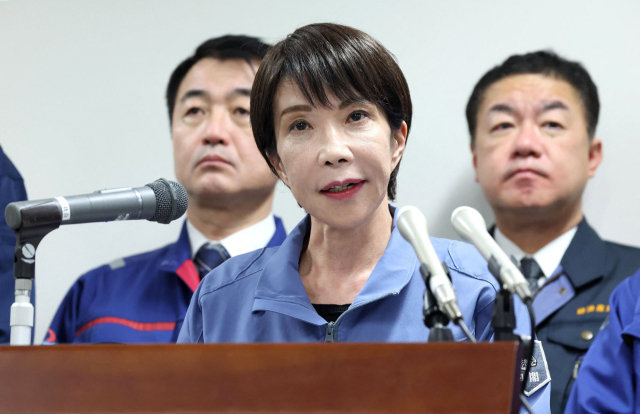
Against this backdrop, the Takaichi government submitted a supplementary budget of 18.3034 trillion yen to the National Diet on Sunday, the largest since the COVID-19 pandemic. The government and the ruling Liberal Democratic Party aim to pass the supplementary budget before the current parliamentary session ends on December 17.
"The Takaichi government's stimulus measures will gain support," Bloomberg reported. While the Bank of Japan is expected to raise interest rates by 0.25 percentage points this month, Nikkei forecast that additional rate hikes will be limited, with only one increase expected next year.