
Northeast Asian Security Order Shaken as China-Japan Military Tensions Peak, U.S. and China Silent on Denuclearization
**China-Japan Conflict Risks Military Clash After Radar Lock Incident**
Military tensions between China and Japan have escalated sharply following Japanese Prime Minister Sanae Takaichi's suggestion that Japan would intervene in a Taiwan contingency, raising concerns about potential armed conflict.
After Chinese fighter jets repeatedly locked radar on Japanese Self-Defense Force aircraft, Japan held an emergency briefing in the early morning hours to publicize the incident and gain an upper hand in the battle for public opinion. The conflict has expanded across multiple fronts, with Japan tightening anti-dumping tariff standards targeting China while Beijing deliberately delays rare earth export procedures.
On Wednesday, major Japanese media outlets reported that a Chinese military fighter jet had locked its radar on a Japanese Air Self-Defense Force aircraft over waters near Okinawa the previous day. This marks the first time such radar targeting between military aircraft, rather than naval vessels, has been publicly disclosed.
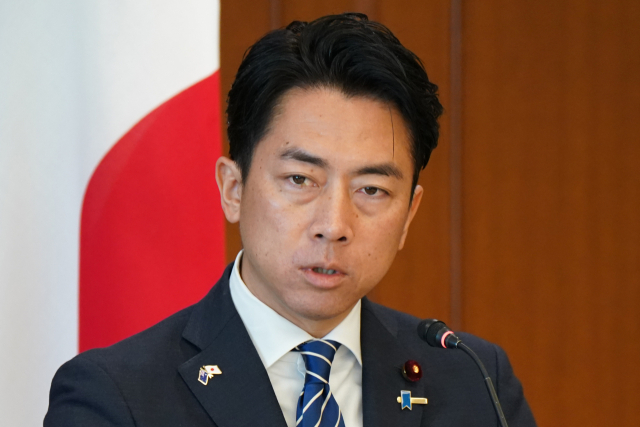
Defense Minister Shinjiro Koizumi held an emergency press conference at 2 a.m. and stated, "On the afternoon of the 6th, over international airspace southeast of the main island of Okinawa, a Chinese military J-15 fighter jet intermittently locked its radar on a Self-Defense Force F-15 fighter twice," adding that the incident was "extremely regrettable."
According to the Defense Ministry, the first radar lock occurred around 4:32 p.m. and lasted approximately three minutes, while the second began around 6:37 p.m. and continued for about 30 minutes. Koizumi strongly condemned the actions as "extremely dangerous behavior exceeding the scope necessary for safe aircraft flight" and said Japan had lodged a strong protest with China through diplomatic and defense channels.
A Chinese navy spokesperson demanded that "Japan stop its slander and strictly restrain its actions on the front lines," claiming that Japan's actions "seriously affected China's normal training and significantly threatened flight safety."
**U.S. and China Both Remove 'Korean Peninsula Denuclearization' from Key Security Documents**
Both the United States and China have omitted references to "Korean Peninsula denuclearization" in their recently released major security documents, drawing attention to the reasons behind this parallel move.
The National Security Strategy released by the U.S. on Monday made no mention of Korean Peninsula denuclearization or North Korea at all. The 2022 NSS under the Biden administration had stated that the U.S. would "pursue sustained diplomacy with North Korea to make tangible progress toward complete denuclearization of the Korean Peninsula while strengthening extended deterrence against North Korea's weapons of mass destruction and missile threats." The 2017 NSS under the first Trump administration also stated that the U.S. was "prepared to respond to North Korean aggression with overwhelming force and will improve options to compel denuclearization of the Korean Peninsula."
The South China Morning Post reported that "China omitted the phrase 'supports Korean Peninsula denuclearization' from its white paper on 'China's Arms Control, Disarmament and Non-Proliferation in the New Era' released late last month." A statement from the September 2005 white paper supporting "the establishment of nuclear-free zones in the Korean Peninsula, South Asia, Southeast Asia, and the Middle East" has been removed.
Analysts suggest this may indicate China is implicitly accepting North Korea's nuclear armament, abandoning its previous stance of "not tolerating a nuclear North Korea," as a way to counter the United States.
**U.S. Defense Secretary Calls South Korea 'Model Ally,' Promises Benefits**
U.S. Secretary of Defense Pete Hegseth has described South Korea as a "model ally" for its high defense spending and contributions to collective security, pledging corresponding benefits.
Speaking at the Reagan National Defense Forum in California on Monday, Hegseth said, "South Korea spends 3.5% of its GDP on core military expenditures and has agreed to take a leading role in conventional defense."
"Model allies who step up to form a strong collective defense network—including South Korea, Israel, Poland, and increasingly Germany and the Baltic states—will receive special favor," he emphasized. He warned that "allies who still fail to do their share for collective defense will face consequences" and that "free-riding will no longer be tolerated."
The Trump administration's National Security Strategy released Monday also stated that the U.S. is "prepared to help countries that take greater responsibility for collective security through more favorable treatment in commercial areas, technology sharing, and defense procurement." This is seen as providing South Korea with justification to persuade the U.S. to adopt projects favorable to Korea when selecting uses for the $200 billion U.S. investment expected to begin in earnest next year.
**Bank of Japan Expected to Signal Higher Terminal Rate to Curb Yen Weakness**
The Bank of Japan is expected to signal a higher terminal rate along with a rate hike at its monetary policy meeting scheduled for December 19, according to market observers. This is interpreted as a move to reverse the yen's weakness by emphasizing that there is ample room for further rate increases beyond a simple policy rate hike.
According to the Nihon Keizai Shimbun on Wednesday, speculation that "the rate hike target could be raised" has spread rapidly in markets following recent remarks by BOJ Governor Kazuo Ueda suggesting an increase in the neutral rate. Ueda told parliament on December 4 that "the neutral rate is currently a concept that can only be estimated within a fairly wide range, but if we can narrow that range in the future, we will announce it in a timely manner."
Market experts interpret Ueda's comments as a signal to raise the lower bound of the neutral rate from the current 1% to the mid-1% range, thereby raising the floor for rate hikes. The Nikkei explained that "if the policy rate is raised by 0.25 percentage points in December to around 0.75%, only one more hike would be needed to reach the lower bound of the neutral rate," adding that "raising the ceiling could be a meaningful response since a narrow range for additional rate hikes could give the impression of limited room."
**Apple Empire Shaken by AI Absence and Executive Exodus**
Concerns surrounding Apple are deepening as the company approaches its 50th anniversary next year. Anxiety is spreading as key executives who have played central roles at Apple for years continue to depart in an "exodus" phenomenon. Apple, which rose to the pinnacle of the global technology industry on the back of successive iPhone and iPad successes in the 2000s and 2010s, has faced criticism for failing to establish a presence in the artificial intelligence era and falling behind the innovation curve.
According to Bloomberg on Monday, Johny Srouji, Apple's senior vice president of hardware technologies, is expected to leave the company soon. Srouji joined Apple in 2008 and developed the A4, the company's first custom chip used in the first-generation iPhone. He has enjoyed the deep trust of CEO Tim Cook. However, he has reportedly informed Cook and colleagues of his intention to leave. While Cook is reportedly working hard to retain him by offering exceptional compensation and expanded authority, most observers believe it will be difficult to change Srouji's mind.
The Wall Street Journal diagnosed that "Apple has lost its innovators and competitors are absorbing them to vie for dominance in the digital device market," adding that "Apple's business model has reached a critical watershed moment."
**Trump Administration Emerges as Key Variable in Netflix-Warner Acquisition**
The Trump administration's approval has emerged as a key variable in Netflix's potential acquisition of Warner Bros. Discovery. Market attention is focused on the possibility that Netflix could be saddled with substantial debt and penalty payments if the deal falls through.
According to the Wall Street Journal, the U.S. Department of Justice has begun reviewing the impact of Netflix's Warner Bros. acquisition on streaming market dominance. Citing a senior White House official, the WSJ reported that "President Trump's aides have expressed concerns about this acquisition."