
Seoul Senior Center Gets AI Makeover With Robots, Smart Health Devices
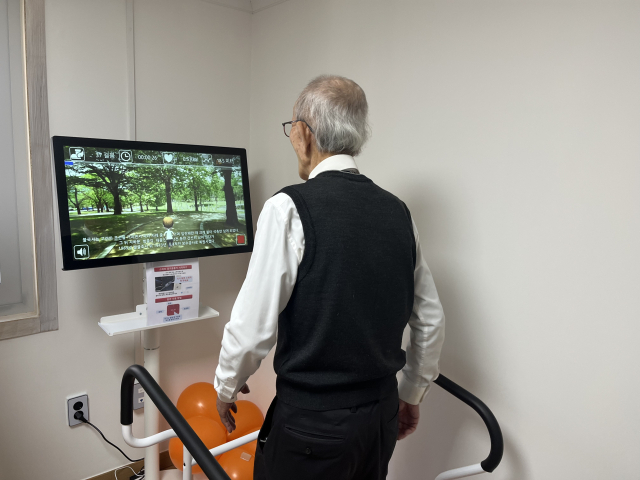
A virtual walking trail appeared on the screen of a senior fitness walker at the Apgujeong Smart Senior Center in Seoul's Gangnam district on the morning of January 4. Lee Jong-gap, 82, began carefully stepping in place as the scenery on screen shifted naturally to match his stride and pace.
When the trot song "What's Wrong With My Age" played through the speakers, Lee sang along to the chorus while keeping rhythm. Cheers of "Oh, well done!" and applause from fellow seniors quickly transformed the exercise station into a makeshift stage.
The Apgujeong Smart Senior Center, which opened on December 26, is Gangnam district's first pilot smart senior center. As local governments across Seoul expand "smart senior center models" equipped with digital devices, Gangnam is accelerating its program with Apgujeong as the inaugural site.
Scenes unfamiliar to traditional senior centers unfolded throughout the facility. A facial recognition device at the entrance automatically identified visiting members. In the living area, curtains glided open in response to the voice command "Hey Google, open the curtains." The kitchen induction cooktop was fitted with preheat sensors to prevent overheating and fires, while seniors practiced ordering coffee at educational kiosks by inserting credit cards.
The most popular spot was the artificial intelligence baduk and omok robot table. When Lee Kyung-woon, 85, asked "Do I place it here?" and set down a black stone, the robotic arm responded immediately, placing a white stone at a precise position. It then paused briefly as if contemplating its next move.
When the robot completed five stones in a row first, exclamations of "The machine won" and "What a world we live in" followed. After the game, the robot sorted the stones by color into their containers. Watching this, the seniors laughed and said, "That's faster than a person."
Long lines formed in front of health monitoring devices. Blood pressure monitors, body composition analyzers, and blood glucose meters stood in a row. Logging in via facial recognition allows measurements to be automatically saved. The accumulated data helps the district office and public health centers identify health warning signs.
Bae Myung-ye, 72, checked her body composition results and laughed, "Oh my, I've gotten shorter." She added, "I can check my health without going to a hospital, so I should come here more often."
Despite the dense arrangement of AI devices and digital equipment, the warmth characteristic of senior centers remained. Ra Soon-woo, 83, the center's general affairs manager preparing lunch, said, "I come at 8 a.m. to make side dishes. Machines are convenient, but a senior center ultimately runs on people."
Seniors trying screen park golf patted each other on the back saying "You've got good power today," and when someone started singing, those nearby clapped along.
The smart senior center initiative was launched to address seniors' leisure, health management, and safety needs in one space. Screen park golf is still in the stabilization phase, but Gangnam district plans to introduce professional instructor classes to increase utilization.
"We will strengthen training on exercise equipment and healthcare devices so that seniors can live more safely and comfortably," a Gangnam district official said.