
Korea Customs to Establish 'Korean Desk' After Record Drug Seizures
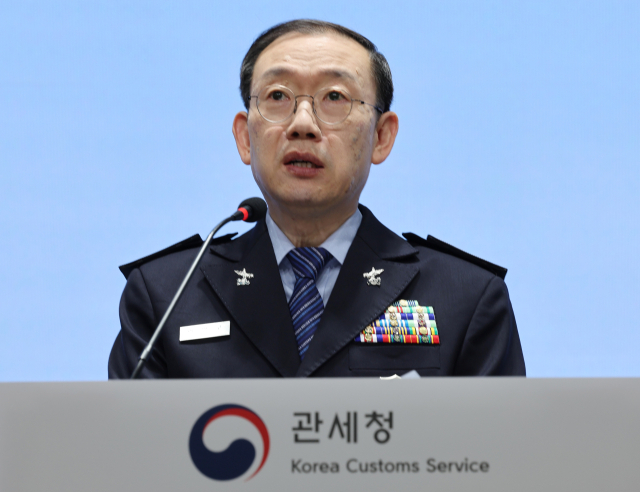
Korea Customs Service (KCS) announced plans to establish a "Korean Desk" — a dedicated channel for combating Korea-targeted drug crimes — as part of intensified enforcement measures following seizures of nearly 3,000 kilograms of drugs at national borders this year.
KCS Commissioner Lee Myung-goo unveiled the "Comprehensive Drug Enforcement Plan for Restoring Korea's Drug-Free Nation Status" at the Seoul Main Customs office on Sunday. The measures were developed in response to the rapid increase and growing scale of drug smuggling.
From January through October, customs authorities seized 1,032 cases totaling 2,913 kilograms of drugs. Compared to the same period last year, the number of cases rose 45% while the weight surged 384%. The volume marks the largest seizure on record.
The agency outlined five key initiatives: establishing an integrated risk information management system, eliminating blind spots across entry routes, expanding international joint enforcement operations, enhancing enforcement infrastructure, and strengthening regular inspection systems and expertise.
KCS will expand international joint operations by dispatching customs officers to partner countries to jointly analyze, screen, and intensively inspect high-risk cargo and travelers bound for Korea. Cambodia, Laos, Canada, Germany, and France will join the existing network of Thailand, Vietnam, Malaysia, the United States, and the Netherlands. A Korea-Cambodia customs commissioner meeting is scheduled for January to address transnational crimes including voice phishing.
The agency will establish a new "Drug Information Center" to centralize drug intelligence and standardize analysis and utilization procedures for high-risk travelers and cargo. Comprehensive inspections will be expanded immediately upon landing of high-risk flights, and body searches of suspected drug concealers will be actively conducted through legal amendments.
For cargo from high-risk countries, dedicated entry channels and inspection stations will be installed, with an "X-Ray Intensive Reading System" ensuring minimum seven-second scanning times. An AI-powered "dual screening system" will also be implemented, with artificial intelligence conducting primary screening followed by secondary inspection by dedicated X-ray personnel.
"Most drugs distributed domestically are smuggled from overseas," Commissioner Lee said. "The role of the Customs Service in preemptive interdiction at the border is crucial."